
Dieter Rams’ 620 Chair Programme
Dieter Rams’s 620 Chair Programme turns the upholstered armchair into a modular structure, designed to change without losing its identity.
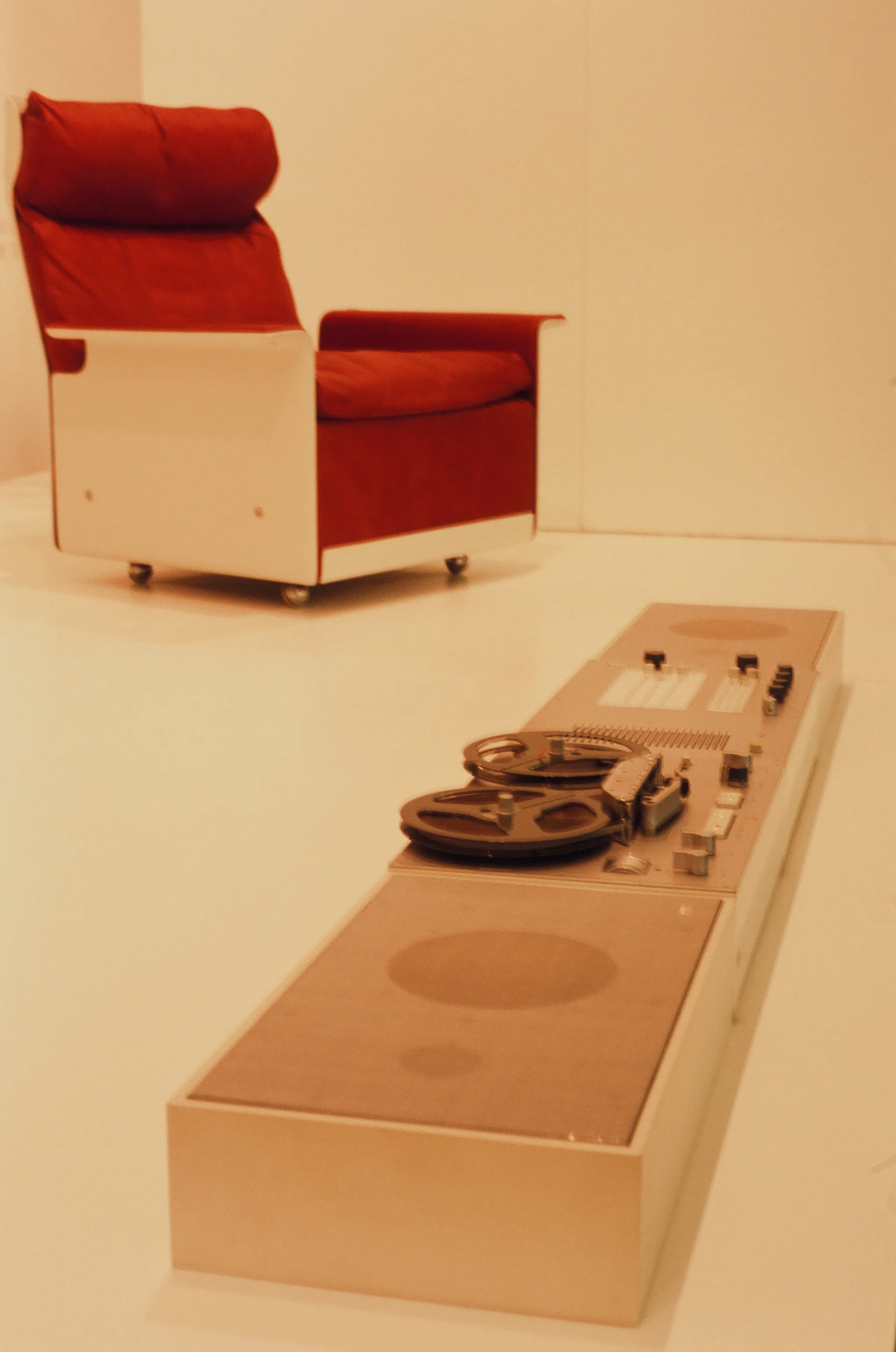
In 1962, when he was only 30, Rams framed the design around a precise contradiction: the high comfort of a fully upholstered classic armchair with the visual lightness of a minimal frame.
The 620's pale shell, deep red cushions, and small casters make Rams's contradiction visible: generous comfort held inside a frame that keeps its weight light.
The answer was neither purely traditional nor purely technical. He combined a lacquered fiberglass shell with traditional upholstery and coil springs, preserving familiar comfort within a newly engineered structure.
The 620 is less a single chair than a kit of parts. Individual armchairs link together to form sofas. Back heights can change. Bases can be exchanged for feet, castors, or swivel mechanisms.
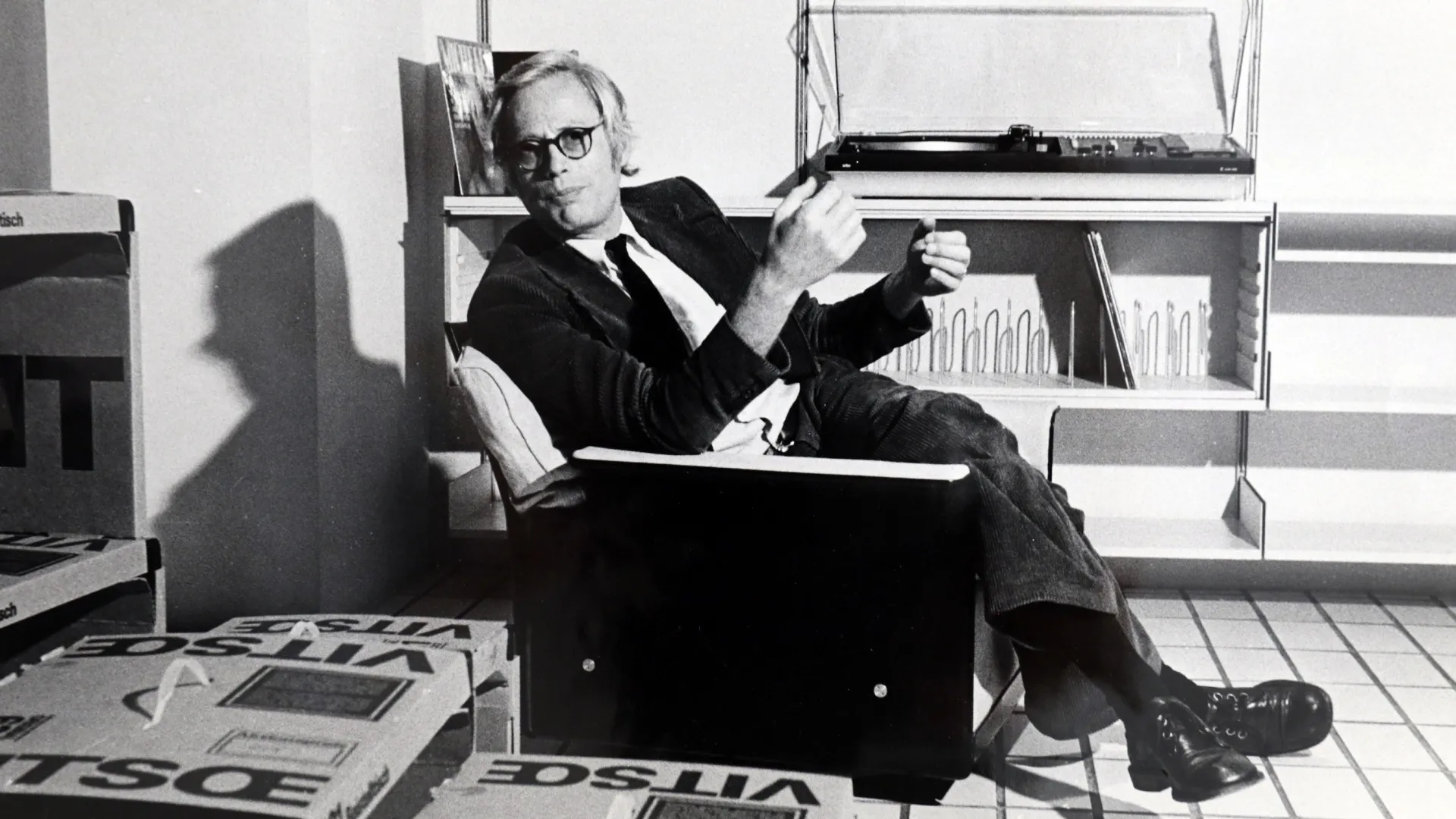
Dieter Rams sits on a 620 as the chair's parts become a system: one object already carrying the possibility of a larger programme.
Thus, its form exceeds any single configuration.
Competitors responded to the design’s success by producing their own versions in 1969. Imitation made the chair’s origin story consequential. Co-founder Niels Vitsœ fought a legal battle that led, in 1973, to rare judicial copyright protection for the chair as a personal, original creation of high aesthetic value.
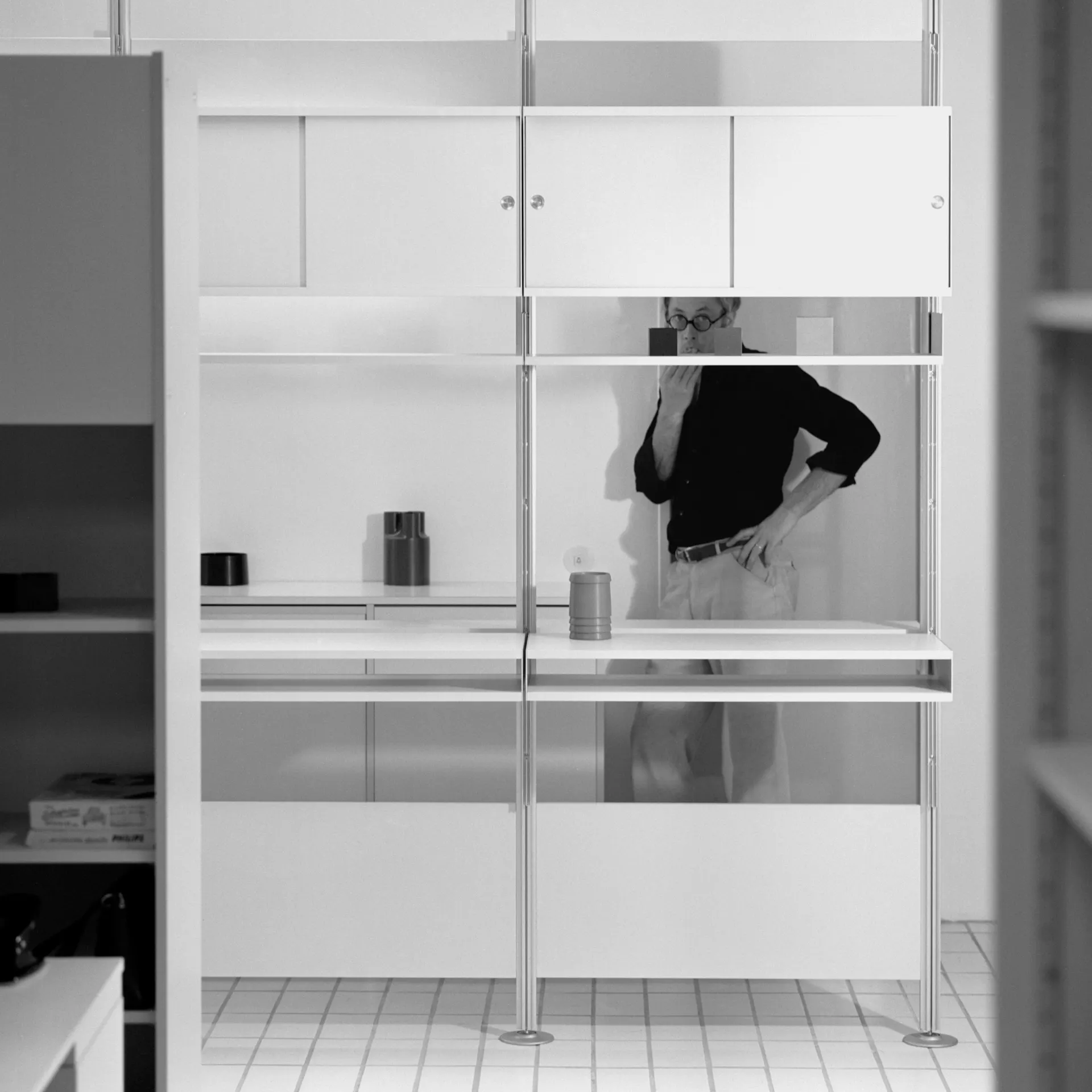
Rams stands at Vitsœ's first Frankfurt shop in 1971, a working context for the company behind the 620 rather than a solitary studio portrait.
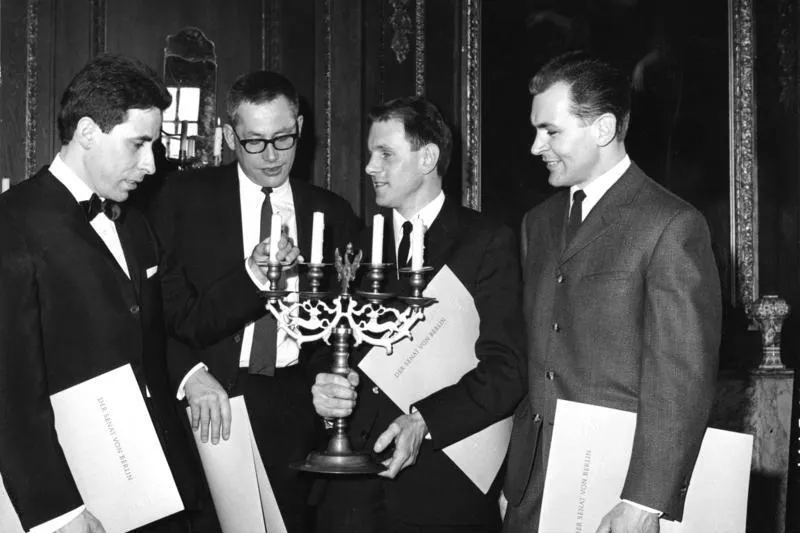
At the 1965 Berlin Art Prize ceremony, Rams stands among fellow designers with a certificate in hand. The 620 belonged to a working design culture.
The judgment identified a basic fact hidden by modularity: rearrangeable components do not erase ownership.
The 2013 relaunch extended that fact. Vitsœ and Rams completely re-engineered the chair, down to custom stainless-steel bolts, to improve its longevity. This was not a sentimental preservation of a 1962 object. It was a continuation of the original argument.
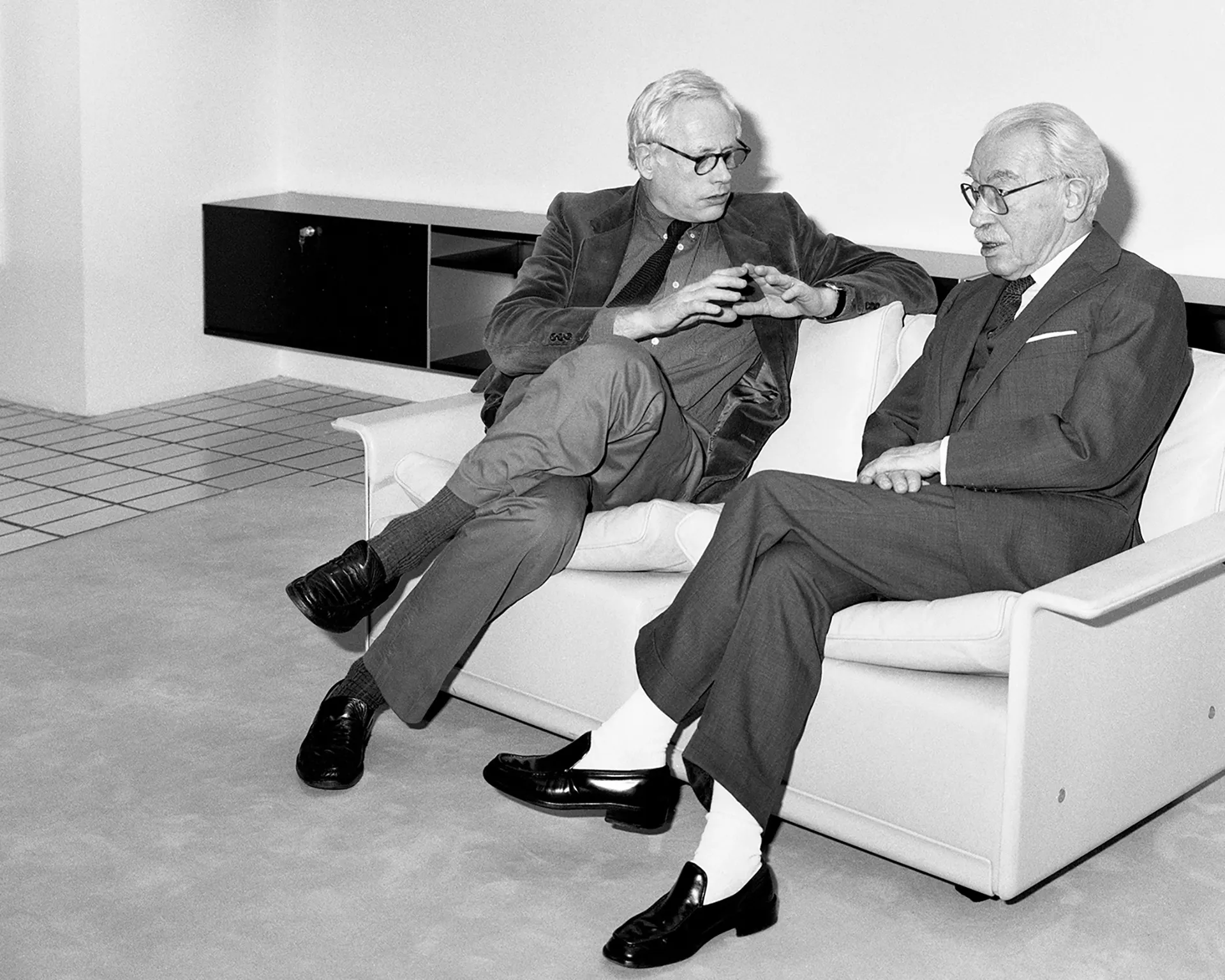
Circa 1975, Dieter Rams and Niels Vitsœ sit on a 620 together; the chair's continuity runs through both its designer and the company that carried it forward.
Rams’ “less, but better” philosophy is often treated as a visual principle. In the 620, it becomes a material one. The chair is built to be repaired, reconfigured, and passed down through generations.
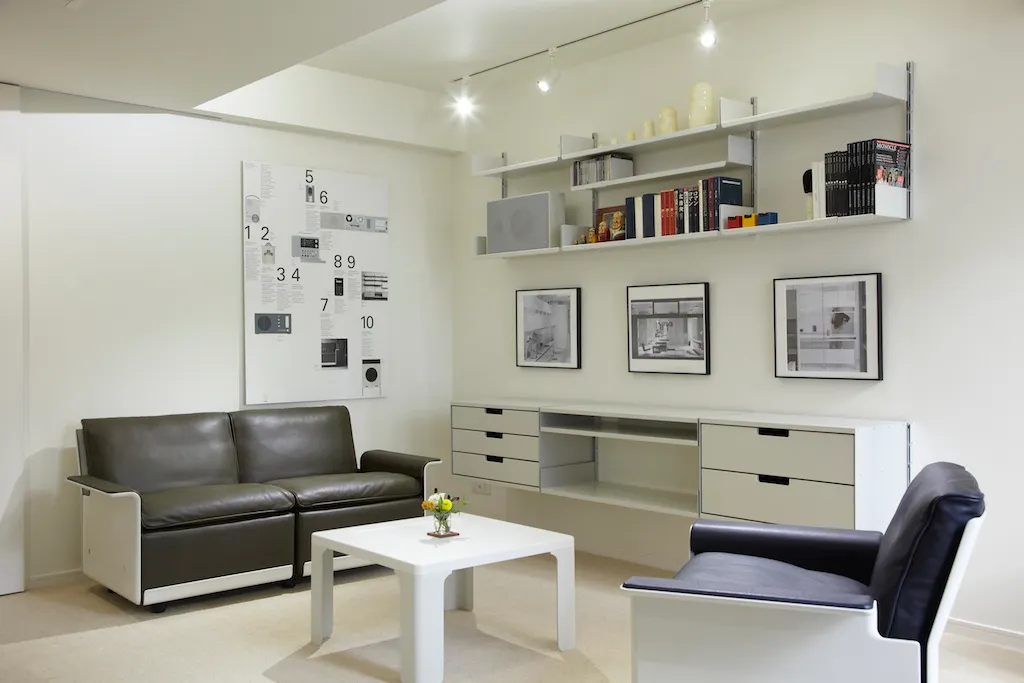
In a Tokyo room, a 620 armchair sits beside a matching two-seat sofa, the same system changing scale without changing its identity.
The 620 survives by treating permanence as something adaptable.