Logotype as Passport Stamp
Michael Rider advances a curiously managerial vision of modernity—one in which the garment is less an instrument of expression than a credential of belonging. Across calibrated portraits, hygienically isolated accessories, and recurrent typographic overlays, the house translates bourgeois discretion into a legible, exportable image system. The rhetoric is not one of fantasy, but of compliance: with precedent, with codes of dress, with institutional taste. Craft is present, though consistently subordinated to the optics of order.
The Blazer as Filing Cabinet
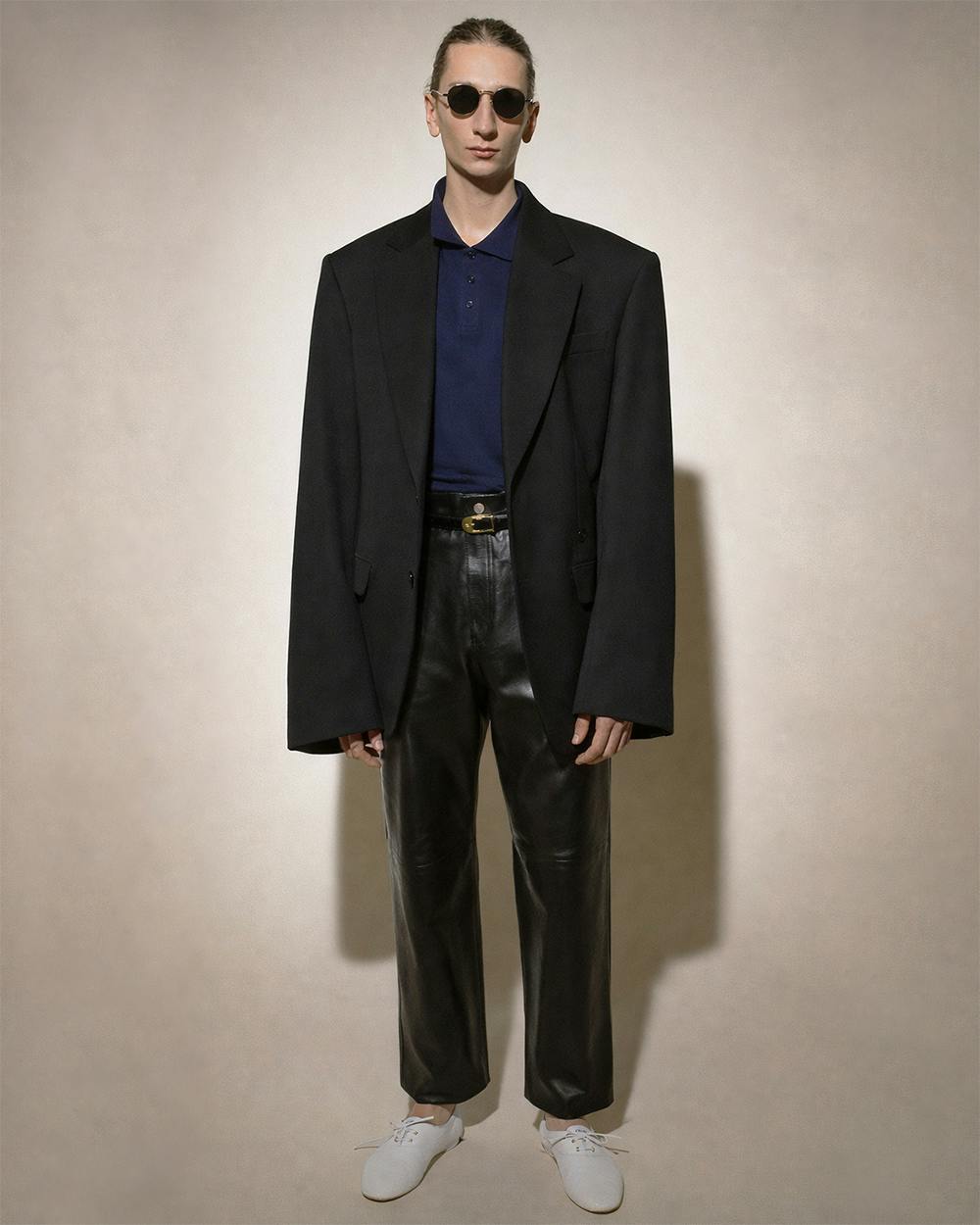
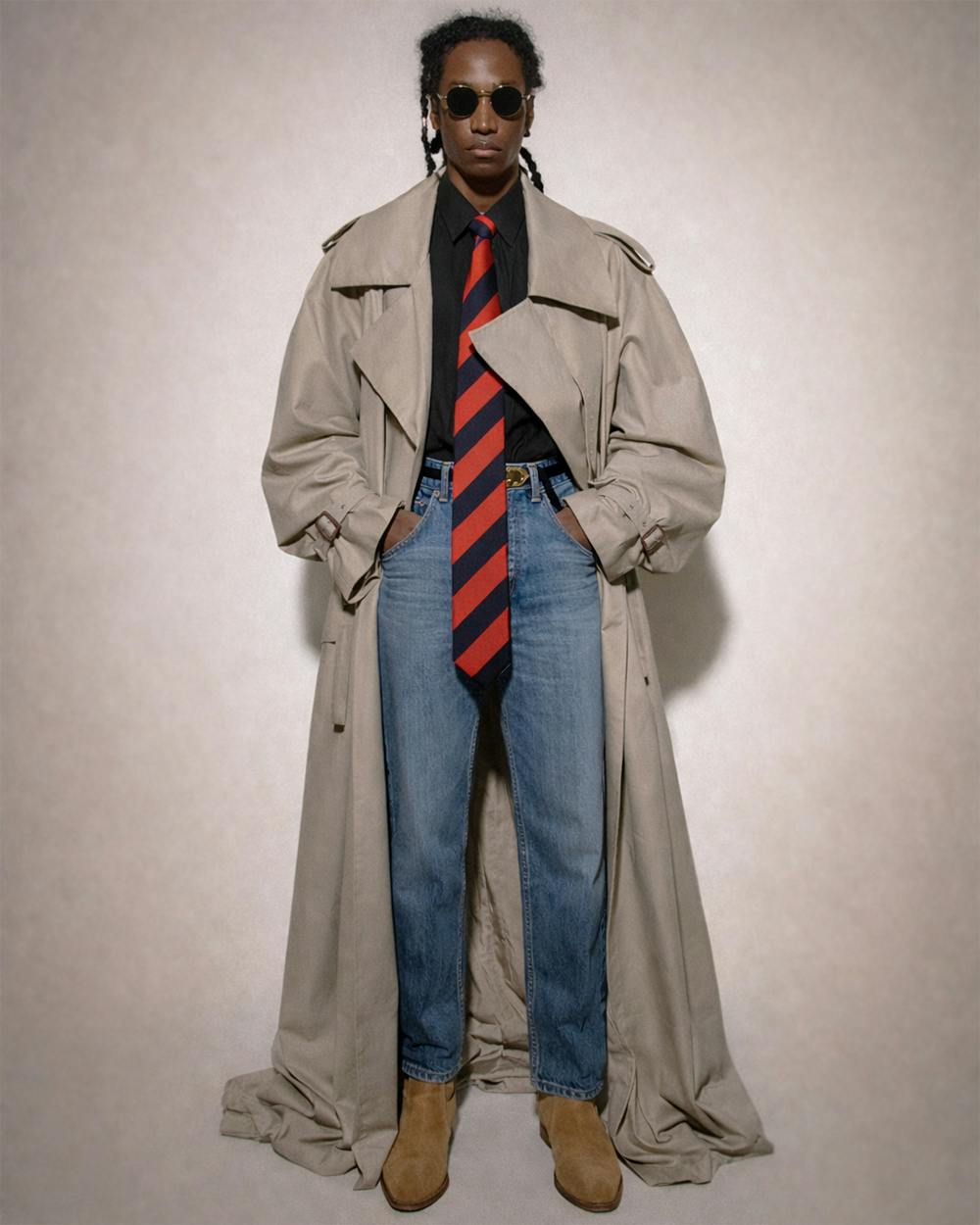
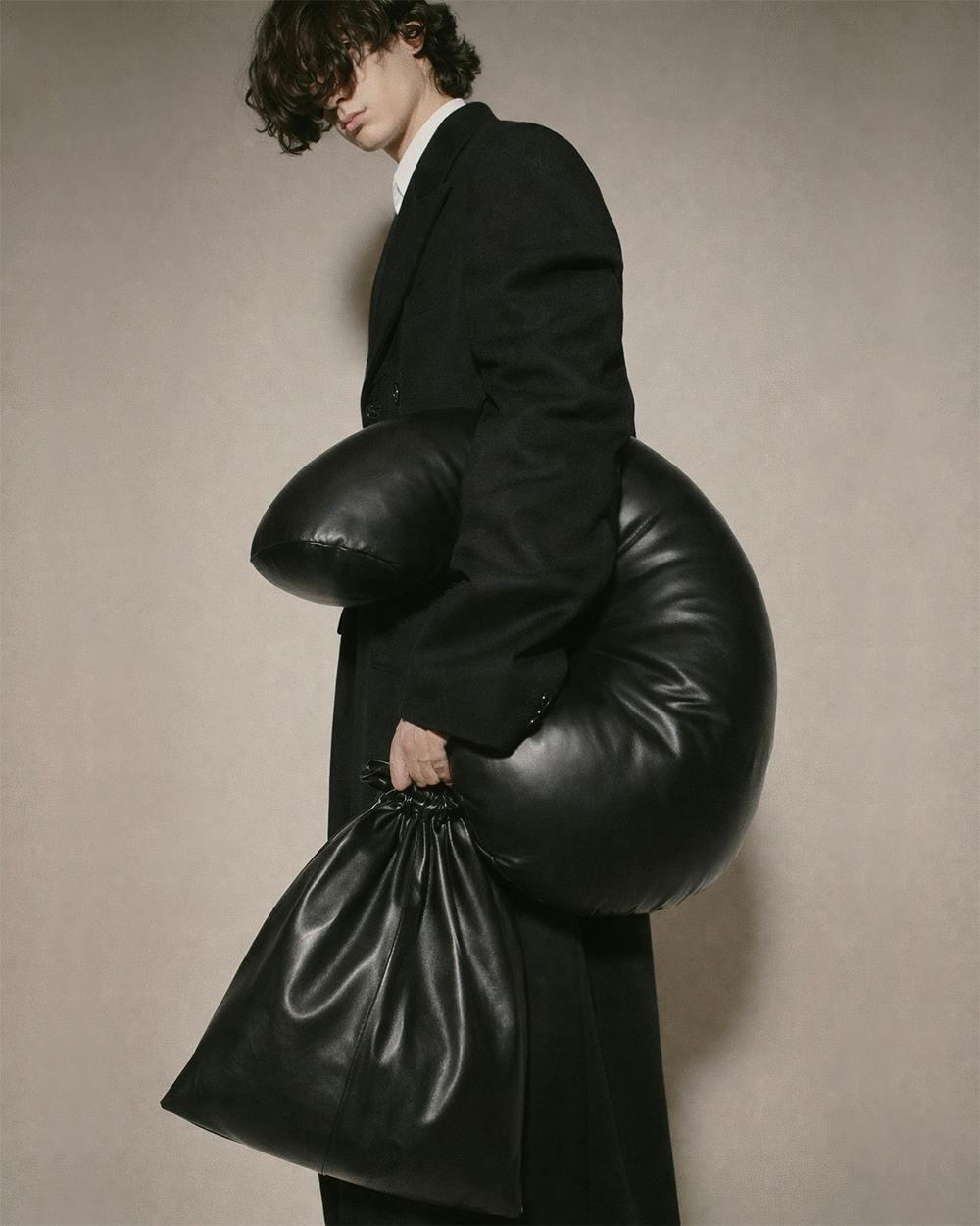
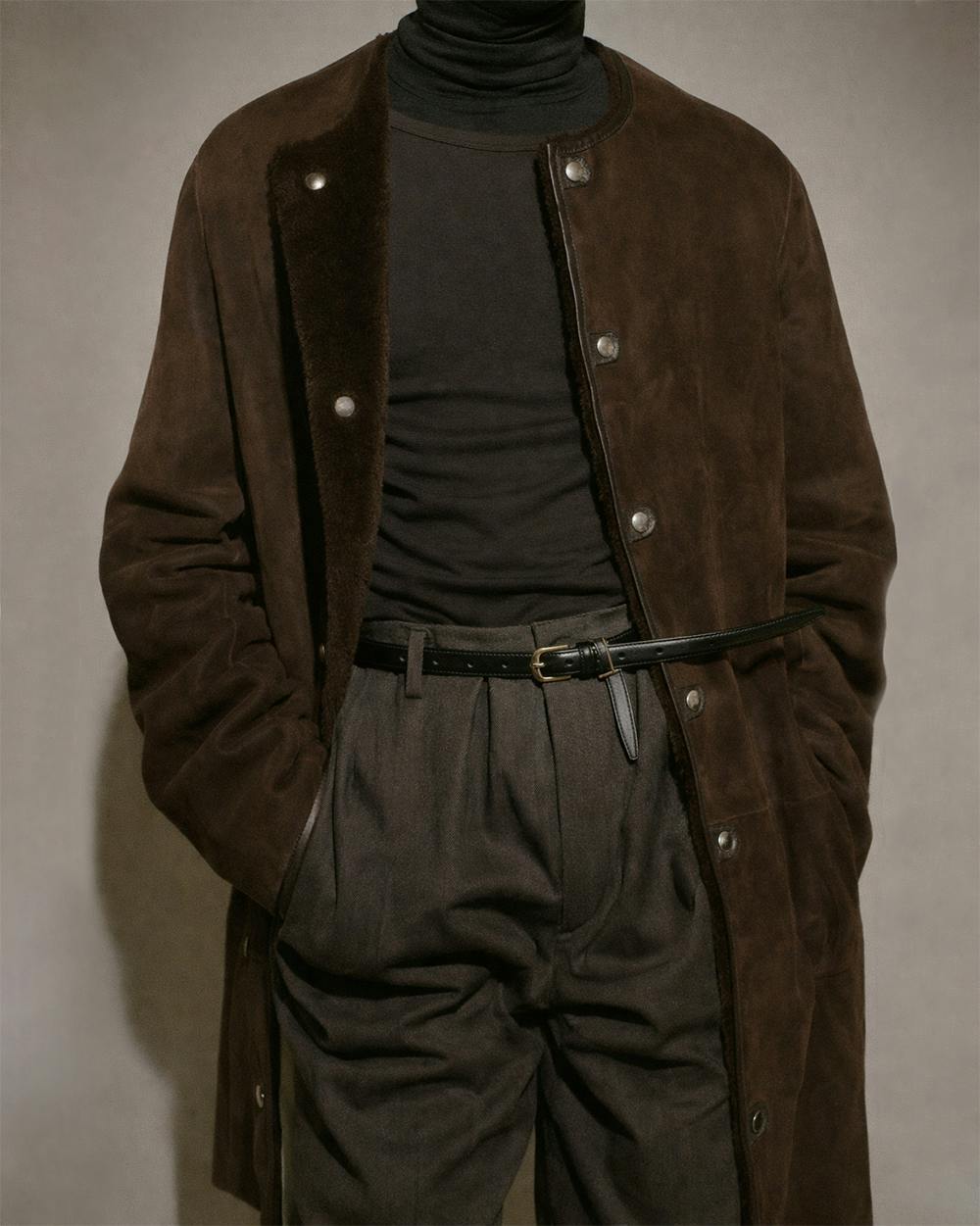
Tailoring here is emphatically planar. Jackets fall with a bureaucratic virtue—shoulders squared without aggression, lapels restrained, waist suppression minimal but firm. Leather trenches are belted into compliance rather than draped; silk scarves introduce chromatic interruption without structural deviation. Insistence on vertical alignment suggests disciplined canvassing and conservative sleeve pitch. The negotiation with the body is administrative: posture is corrected.
Logotype as Passport Stamp
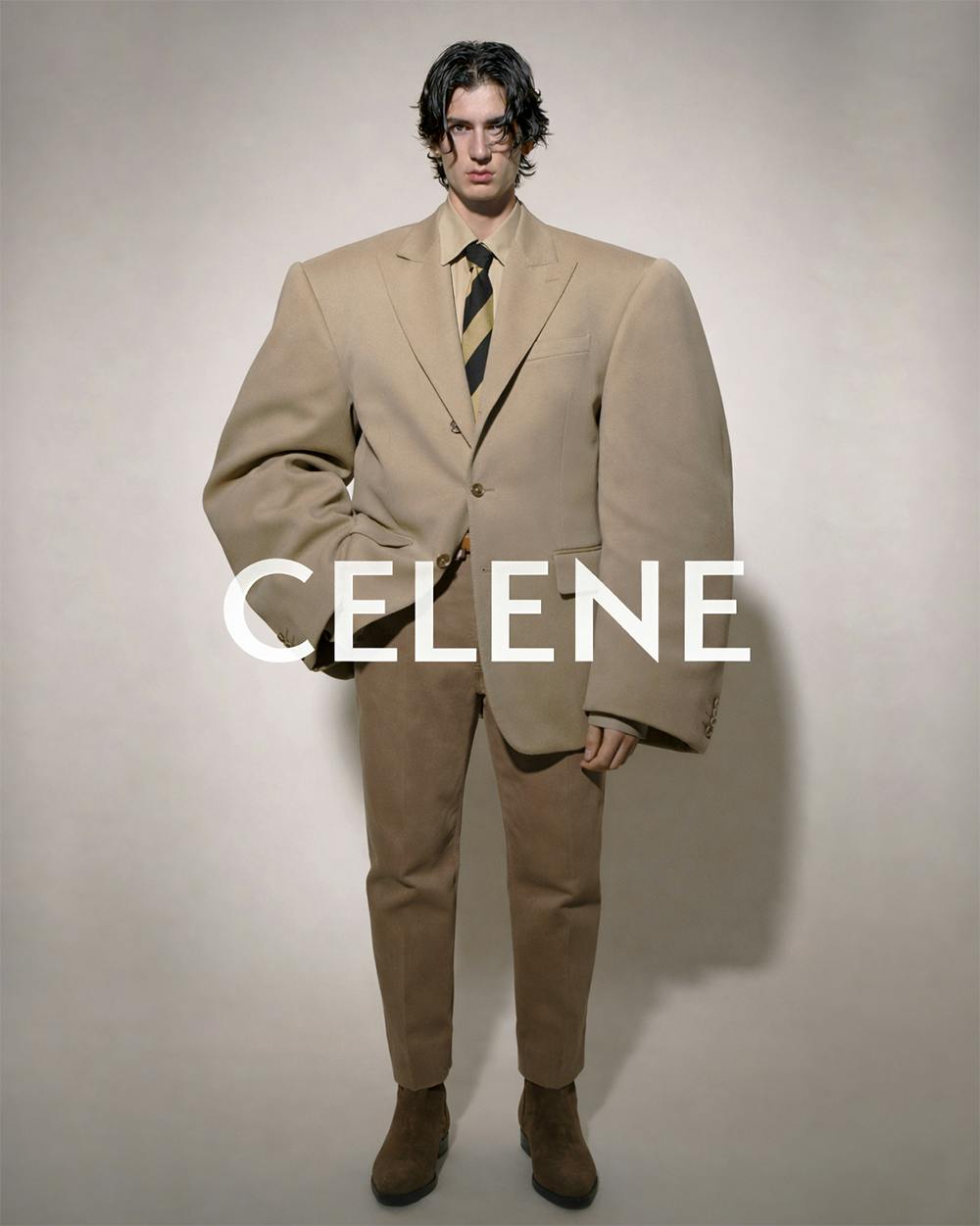
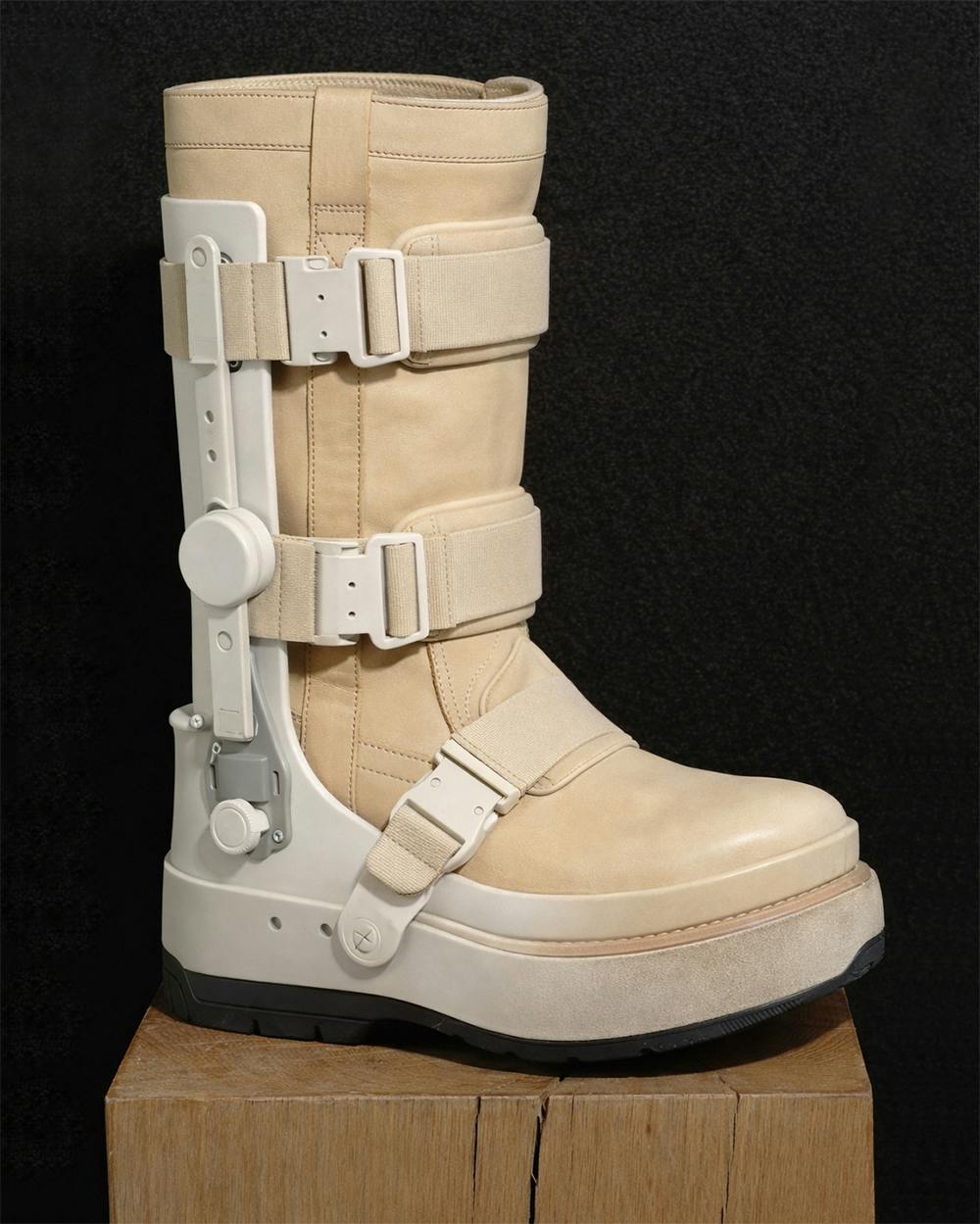
The persistent imposition of “CELINE PARIS” across otherwise uncluttered portraits performs less as branding than as certification. Typography is deployed with documentary regularity—appearing at the midline of torsos, over eyewear, or bisecting silk twill prints—creating the effect of institutional watermarking. The grid alternates between product still life (lipsticks, fragrance bottles, boots) and generationally ambiguous casting, producing a rhythm that recalls cataloguing procedures rather than editorial sequencing. The feed reads as a controlled registry of sanctioned appearances.
Inheritance Without Anecdote
References to Left Bank minimalism, 1970s prêt-à-porter pragmatism, and late-century corporate suiting are evident. The striped tie, the camel overcoat, the tortoiseshell optical frame. Historical lineage is not extended so much as maintained under conservation protocols. Revival operates through continuity of posture rather than novelty of cut.
Emotional Temperature: Ambient Detachment
Facial expressions are uniformly moderated: affect withheld, gaze steady, lips closed unless cosmetically accentuated. Even the saturated red lip appears less as seduction than as punctuation. The models do not inhabit the garments so much as file them. Persuasion proceeds by tonal neutrality—a promise that nothing here will embarrass the wearer in professional daylight.
Fluency as Gatekeeping
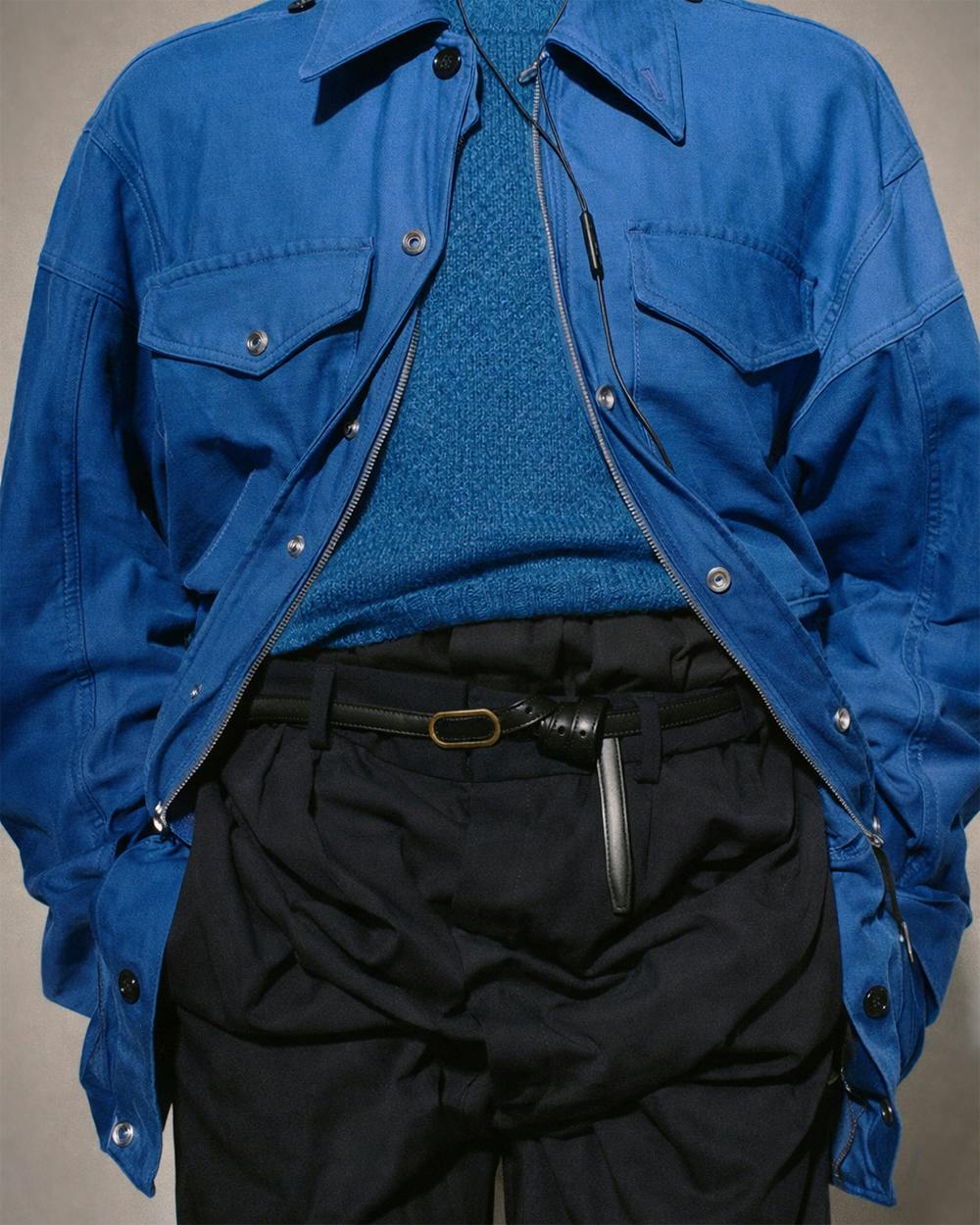
Status accrues through understatement. The client is presumed capable of recognizing the significance of a keyring charm, a glove, or a subtly monogrammed belt. Accessibility is suggested via denim and jersey tees, yet always stabilized by suiting or leather goods. Authority is granted to those fluent in the syntax of prudence; exclusion occurs by semiotic illiteracy rather than price alone.
Capitalism in Business Casual
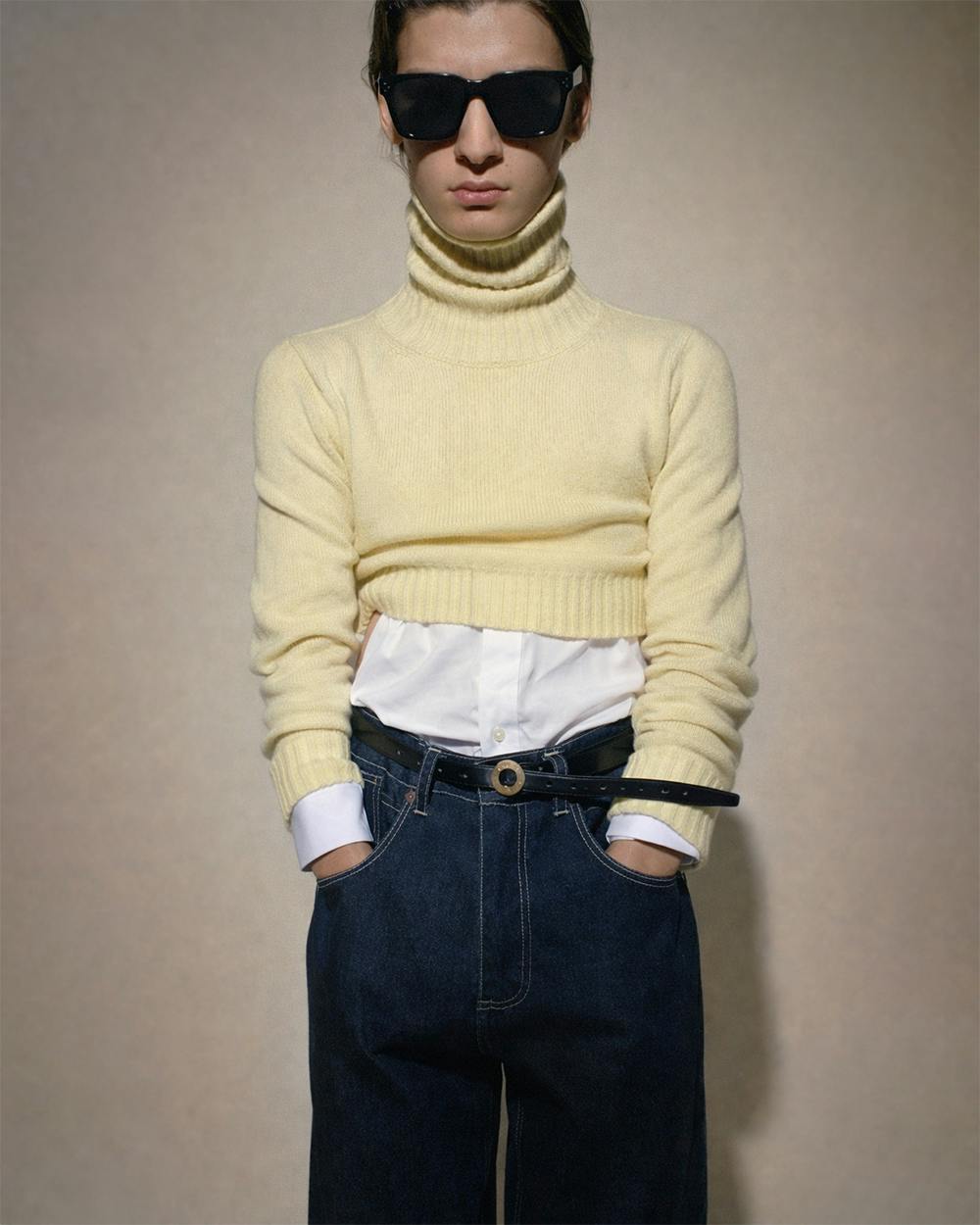
Michael Rider's fixation on office-adjacent attire—shirts, ties, trench coats, sober knitwear—betrays an ongoing reconciliation between luxury and managerial labor. The message appears to be that distinction may be purchased without abandoning one’s meeting schedule. Inadvertently, the feed reveals the continued prestige of bureaucratic identity as a site of aspirational self-fashioning.
Presentness as Maintenance
Temporal claims are resolutely contemporary. There is no overt futurism; instead, a steady rehearsal of what modernity has already agreed upon. Strategic anachronisms—Western boots, collegiate ties—are introduced not to disrupt chronology but to thicken it.
The Wearer as Junior Partner
The implied consumer is neither rebel nor aesthete, but custodian-in-training: a junior partner in an ongoing firm of taste. The garments stabilize identity through affiliation with established codes, permitting mild personal inflection without jeopardizing legibility. One dresses here not to transform, but to be cleared for entry.